
Azure DevOps PR Gating with an Entra Service Principal
Let Aikido run PR checks on your Azure DevOps organization as a Microsoft Entra service principal instead of a personal access token.
Instead of a personal access token (PAT), you can let Aikido post pull request (PR) statuses and comments in your Azure DevOps organization as a Microsoft Entra service principal that you own. No token or secret is created or stored: for every call, Aikido proves its identity to Microsoft Entra, which issues a short-lived access token for your service principal. Nothing expires and nothing needs rotating, and every status and comment is posted under the application's own name.
Your workspace must be connected to Azure DevOps Services (dev.azure.com), and your Azure DevOps organization must be connected to a Microsoft Entra tenant (Organization settings → Microsoft Entra). You need to be able to register applications in that tenant and to add users and change permissions in your Azure DevOps organization. You also need the Azure CLI for one command per project. Azure DevOps Server keeps using a PAT.
Azure DevOps PR gating via Aikido supports Azure Repos Git repositories only. Team Foundation Version Control (TFVC) repositories aren't supported for PR gating or Code Quality gates.
First, go to General Settings, click Update Personal Access Token and, on the PR Checks tab, click Use An Entra Service Principal Instead. If PR checks aren't set up yet, go to Integrations, click Connect on Azure DevOps PR checks, and click the same button on the personal access token page.
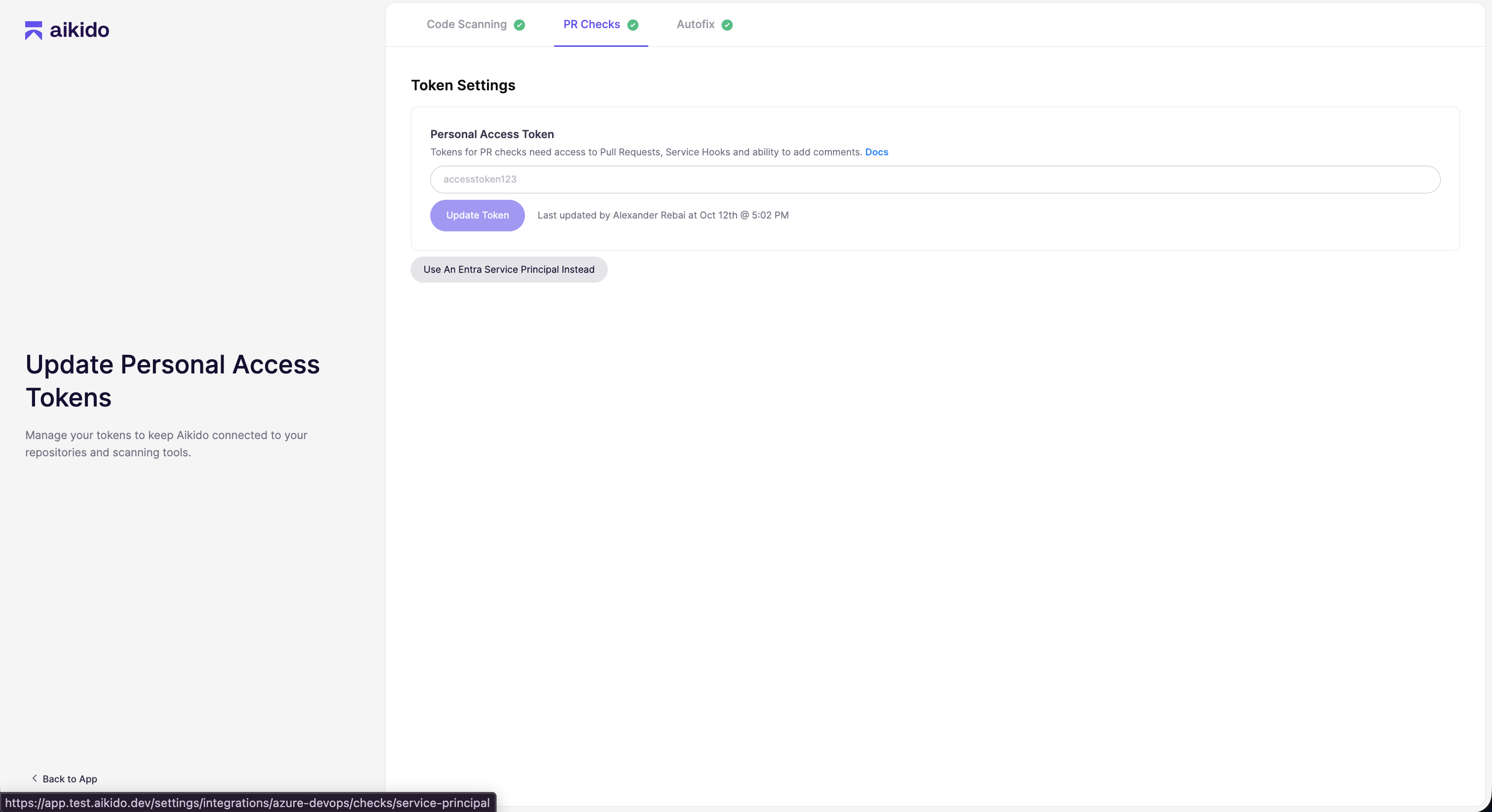
You end up on the service principal management page, which can also be found at Manage Azure DevOps PR Checks service principal. Keep this page open: it shows the Issuer, Subject identifier, and Audience you need in the next section.
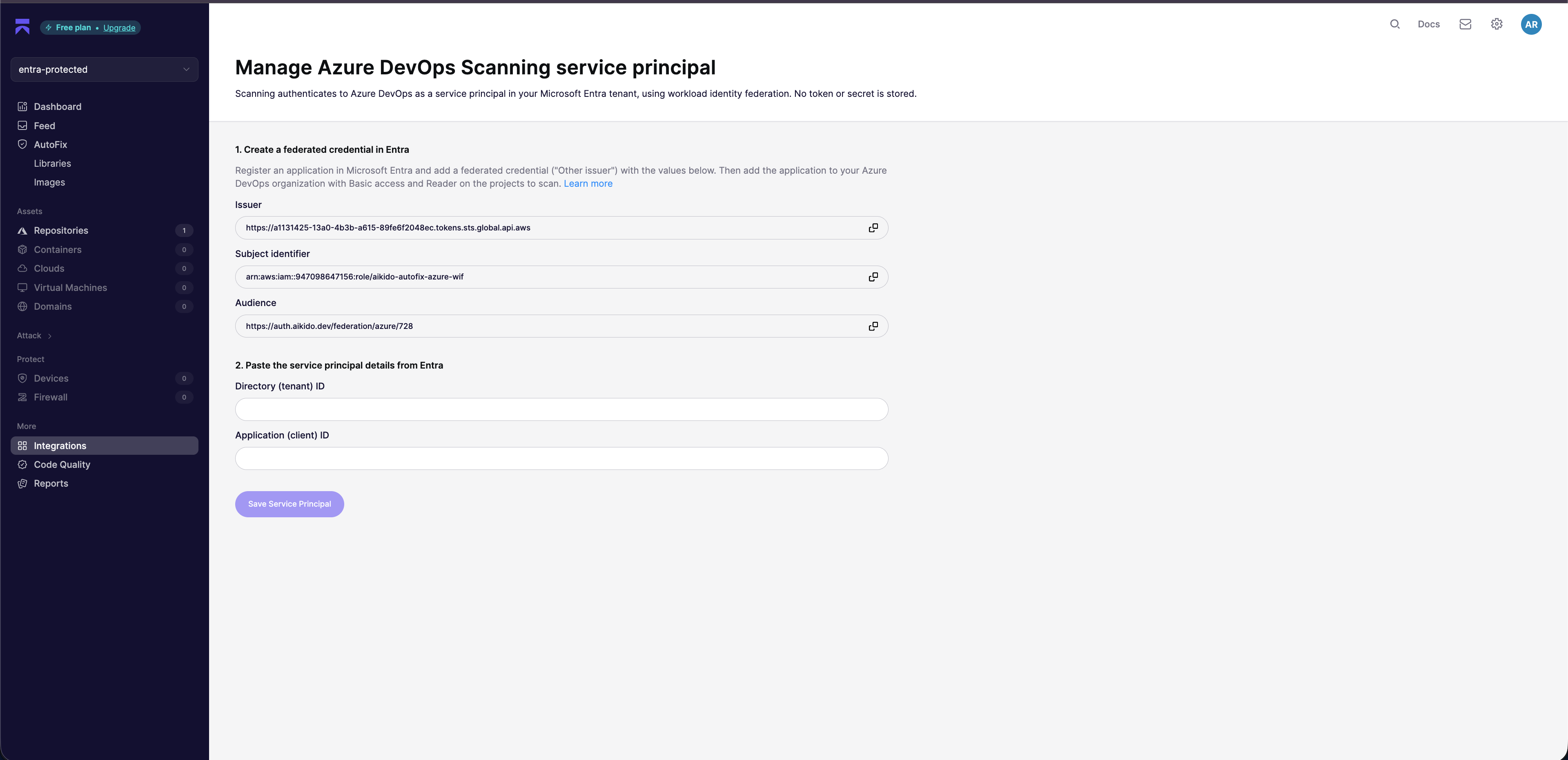
Create a separate application for PR checks, even if you already set up Code Scanning or AutoFix with an Entra service principal. The Issuer and Audience are the same, but the Subject identifier is different because PR checks use their own Aikido identity. Copy it from the PR checks page.
Next, follow the instructions below to create the service principal in Microsoft Entra and give it access in Azure DevOps.
Register the application in Microsoft Entra
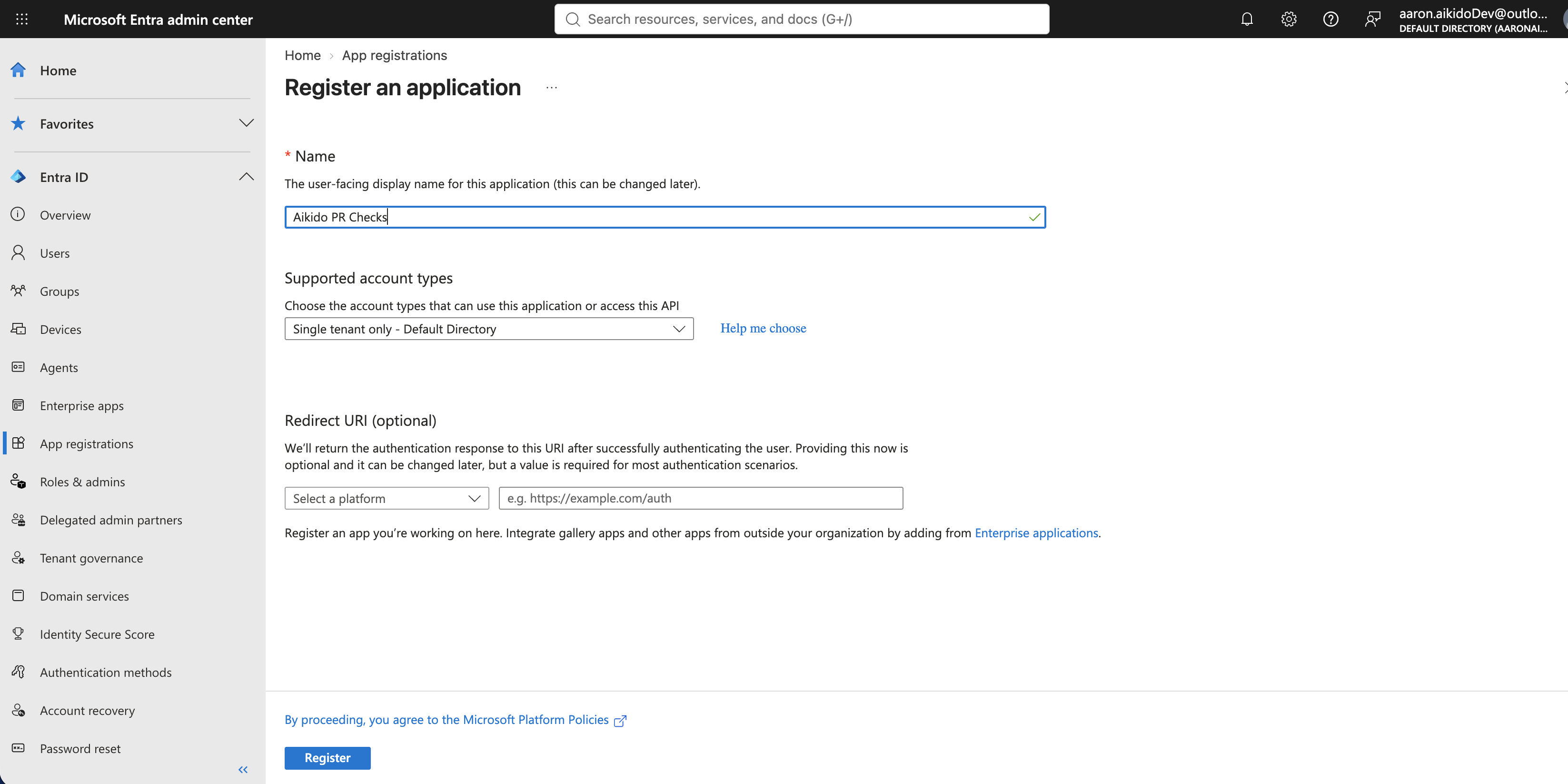
- Open the Microsoft Entra admin center, go to Entra ID → App registrations and click New registration.
- Give the application the name Aikido PR Checks, keep Single tenant only selected, leave the redirect URI empty and click Register.
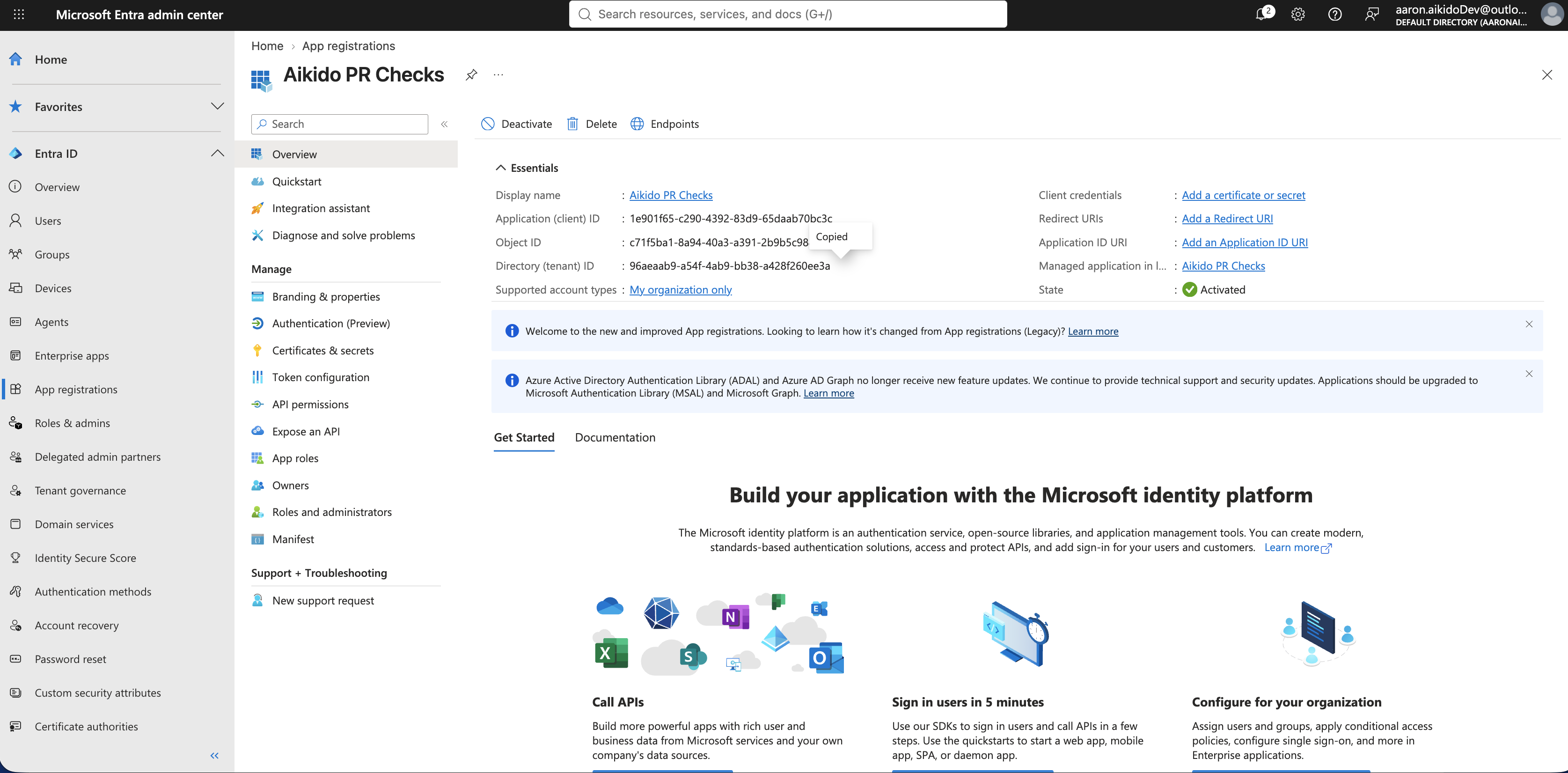
- On the Overview page of the application, copy the Application (client) ID and the Directory (tenant) ID. You insert both in Aikido later.
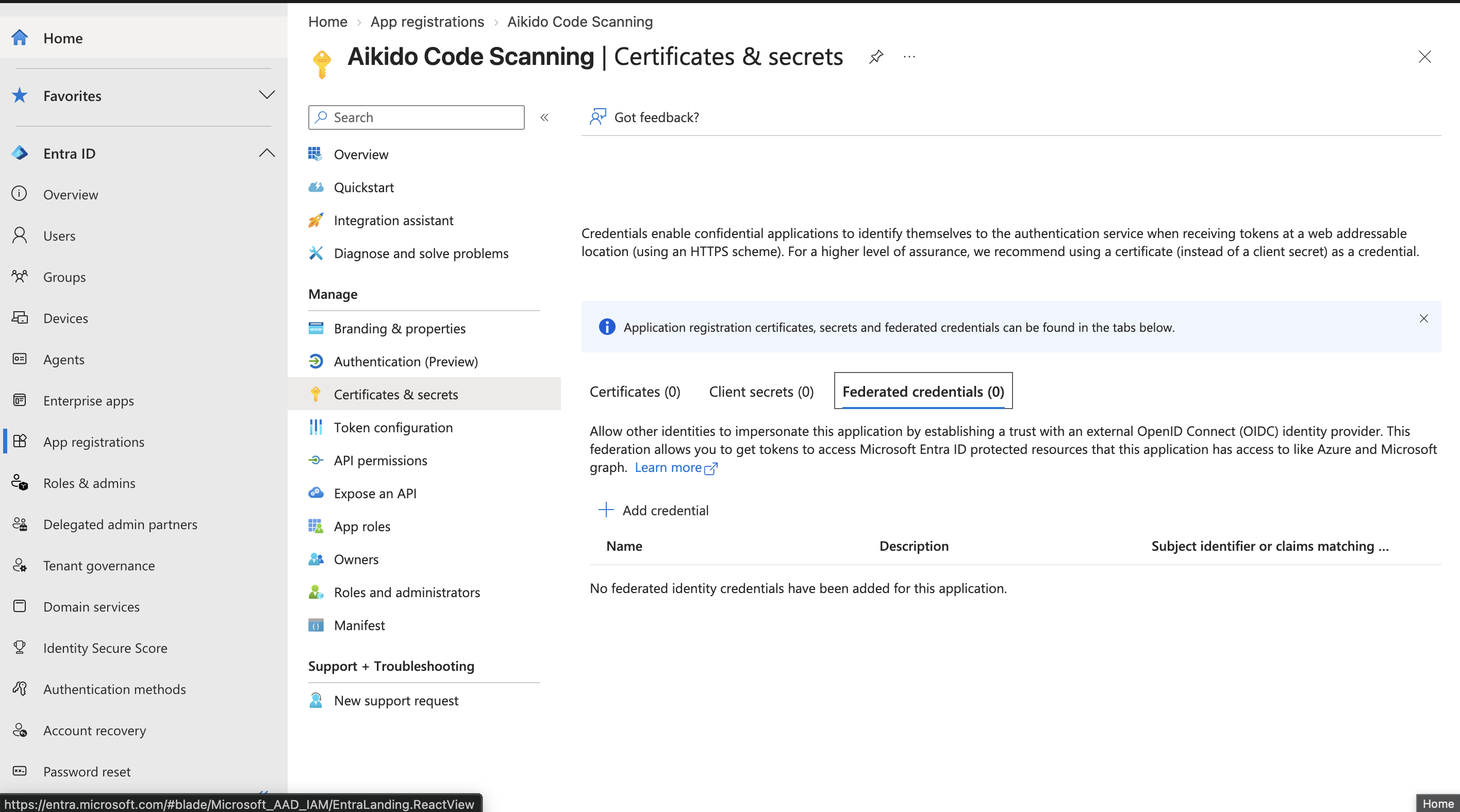
- Go to Certificates & secrets → Federated credentials and click Add credential.
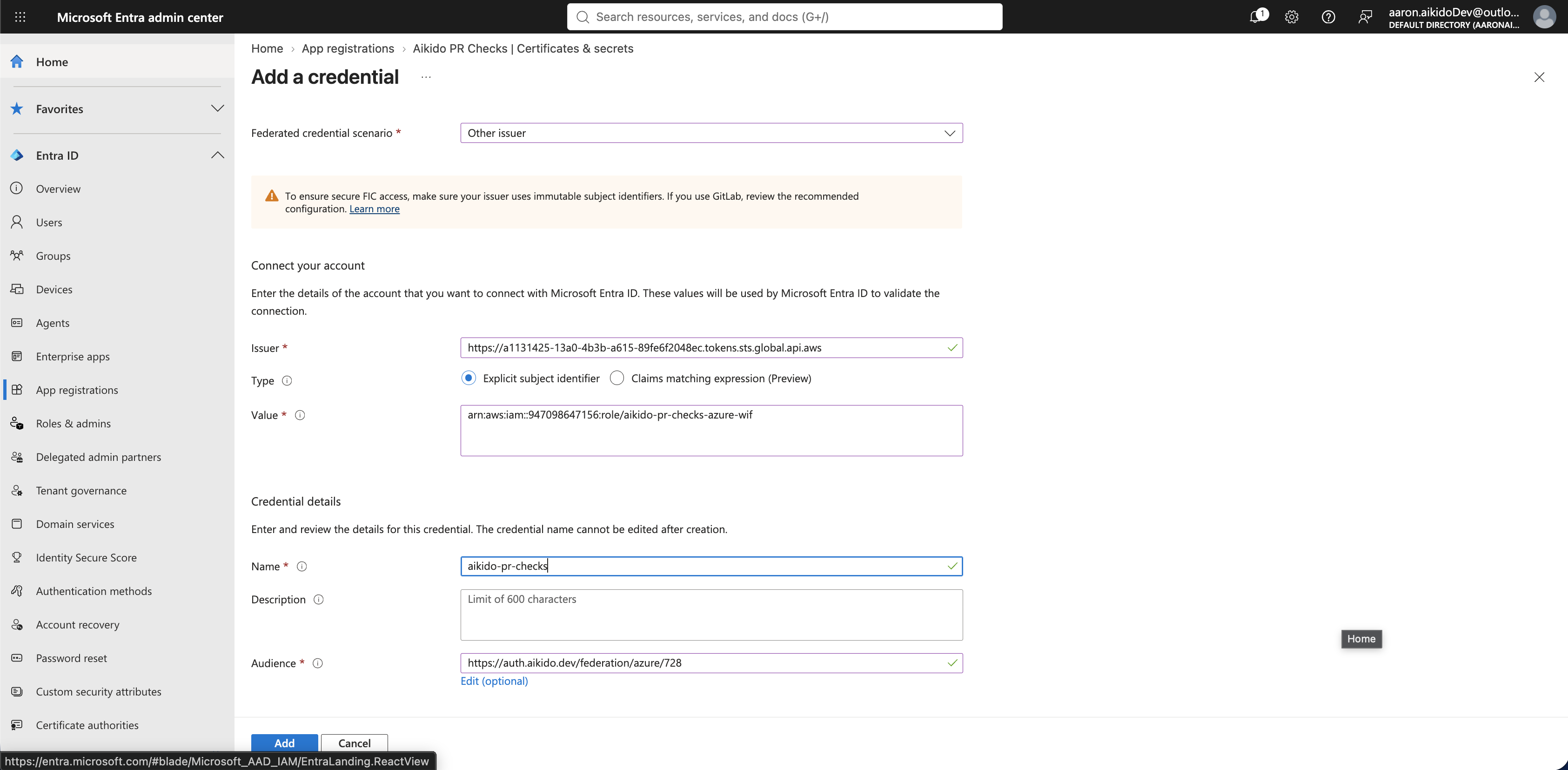
- Select Other issuer and fill in the values exactly as shown on the service principal management page in Aikido:
- Issuer: the Issuer shown in Aikido
- Type: Explicit subject identifier
- Value: the Subject identifier shown in Aikido
- Audience: click Edit and replace the default with the Audience shown in Aikido. It contains your workspace id, so only tokens Aikido mints for your workspace are accepted.
Give the credential a name, for example aikido-pr-checks, and click Add. You don't need a client secret or certificate.
Grant access in Azure DevOps
PR checks need three things in Azure DevOps: read access to your repositories, the right to post statuses and comments on pull requests, and the right to create and delete the service hooks that notify Aikido when a pull request is opened, updated, or commented on. Grant exactly those three and nothing else.
Add the application to your projects
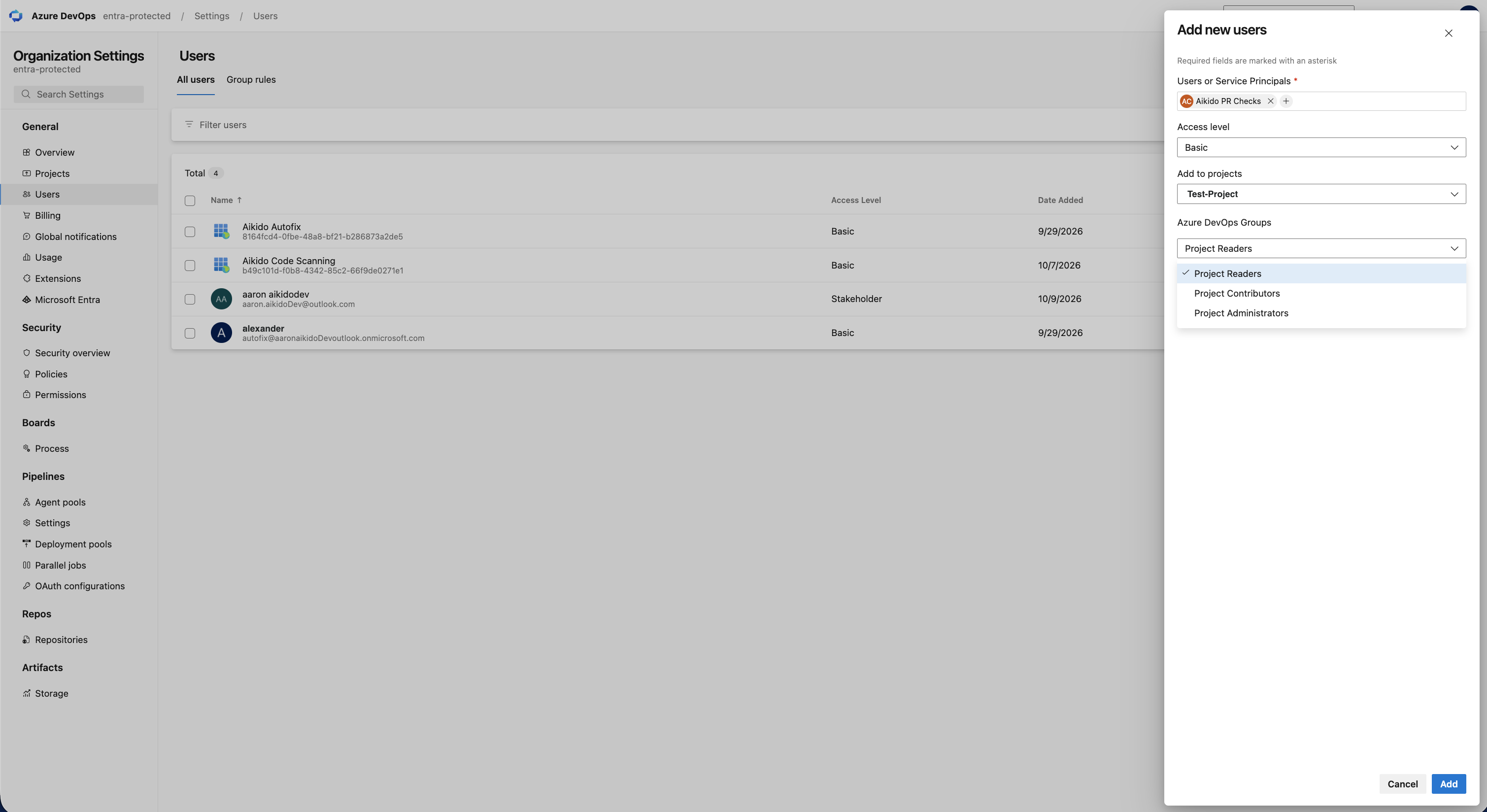
- In Azure DevOps, go to Organization settings → Users and click Add users.
- Search for the application name (Aikido PR Checks), set the Access level to Basic, and add it to the projects you want PR checks on. If the application doesn't show up yet, wait a minute and search again.
- Under Azure DevOps Groups, keep Project Readers. Then click Add.
Allow it to contribute to pull requests
Repeat this for every project you added the application to.
- Open the project and go to Project settings → Repositories → Security.
- Stay on the top-level Git repositories node so the permission applies to every repository in the project, or select a single repository.
- Search for the application name and select it.
- Set Contribute to pull requests to Allow. Leave every other permission as Not set: PR checks never push code.
Allow it to manage service hooks
Service hooks are the webhooks Aikido creates when you enable PR checks on a repository and removes when you disable them. Azure DevOps has no page for this permission: by default only project administrators have it, and Microsoft documents granting it to anyone else through the Azure CLI or the REST API. Granting it this way keeps the application out of the administrator groups, so it can't change permissions, delete repositories, or touch anything else in your projects.
Run the commands below with the Azure CLI and its azure-devops extension, signed in as a Project Collection Administrator. Repeat them for every project you added the application to.
- Get the id of the project:
az devops project show --org https://dev.azure.com/<your-organization> --project "<project name>" --query id -o tsv- Get the descriptor of the application. It starts with
aadsp.:
az devops invoke --org https://dev.azure.com/<your-organization> --area graph --resource serviceprincipals --api-version 7.1-preview --query "value[?displayName=='Aikido PR Checks'].descriptor" -o tsv- Allow the application to view and edit the service hooks of the project. The namespace id is the fixed id of the service hooks permissions in Azure DevOps, and
3is View subscriptions plus Edit subscriptions:
az devops security permission update --org https://dev.azure.com/<your-organization> \
  --namespace-id cb594ebe-87dd-4fc9-ac2c-6a10a4c92046 \
  --subject <application-descriptor> \
  --token PublisherSecurity/<project-id> \
  --allow-bit 3 -o table
The output lists ViewSubscriptions and EditSubscriptions as Allow. Edit also covers deleting subscriptions.
This is the same permission the PAT setup needs from the person who creates the token, which is why that setup requires an administrator. With a service principal you grant it to the application alone.
Connect in Aikido
- Go back to the service principal management page in Aikido.
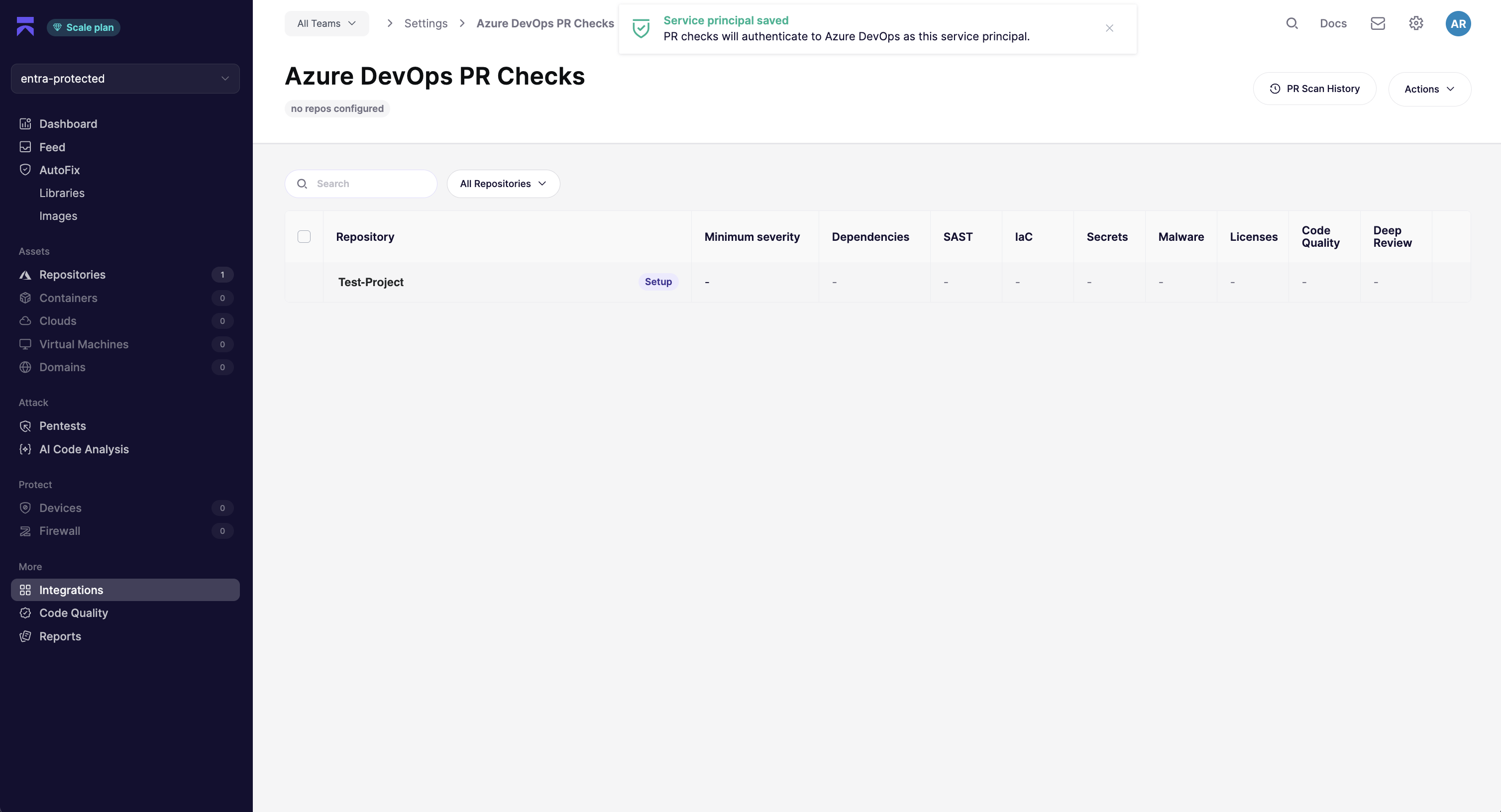
- Insert the Directory (tenant) ID and the Application (client) ID you copied earlier and click Save Service Principal. Aikido requests a token from Microsoft Entra, verifies that it can access the repositories of your Azure DevOps organization, and checks that it can manage service hooks by creating and deleting a test subscription before saving.
You are all set. PR checks now authenticate as the service principal, and the PR Checks tab shows which application is in use. Configure the repositories you want to gate on the Azure DevOps PR Checks page, as described in Azure DevOps PR Gating. Service hooks, statuses, and comments are created by Aikido PR Checks.
To switch back to a PAT, click Use a personal access token instead on the PR Checks tab and save a token: this removes the service principal, and your repository configurations keep working. Uninstall on the Azure DevOps PR Checks page removes the service hooks, the integration, and the service principal. Deleting the federated credential in Microsoft Entra or removing the application from your Azure DevOps organization revokes Aikido's access immediately.